Pakistan's judges get AI rules; lawyers who cite fake cases still don't
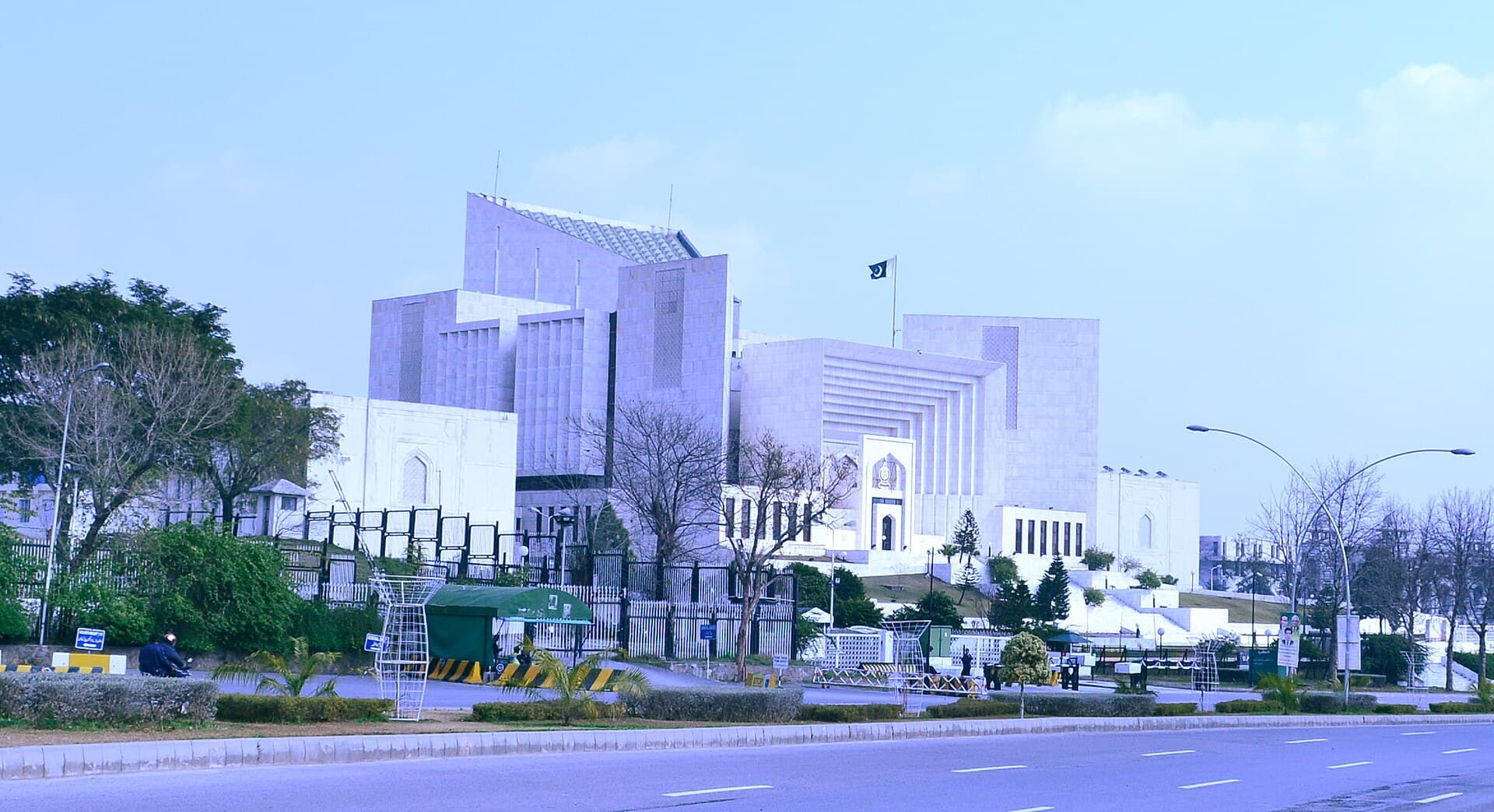
Pakistan's judges now have written rules for using artificial intelligence. The lawyers appearing before them do not. The National Judicial (Policy Making) Committee approved the National Guidelines for Use of Artificial Intelligence in Judicial Institutions of Pakistan at its 57th meeting in February 2026, published by the Law and Justice Commission and refined by the National Judicial Automation Committee chaired by Justice Muhammad Ali Mazhar.
The guidelines put human oversight at their core. Clause 4.1 lets AI assist judicial functions but not replace the judge's final decision, requiring human validation checkpoints at which the judge records independent reasoning. Clause 4.2 requires users to identify portions of a document generated by AI and explain how that material was verified. Clause 4.3 protects confidential data, Clause 4.4 provides for training, and Clause 5.5 prefers locally developed systems trained on Pakistani legal data. Clause 2 makes the guidelines applicable across superior and subordinate courts and tribunals.
The gap sits on the other side of the bar. The guidelines govern judicial institutions; they do not directly bind advocates or Bar Councils, even though counsel supply most of the authorities a court relies on. The test they set for judges - identify what the machine produced and explain how it was verified - is a ready-made template for a Bar Council rule.
The Supreme Court has already flagged the risk. In Ishfaq Ahmed v. Mushtaq Ahmed, decided on March 13, 2025 (C.P.L.A. No. 1010-L/2022, reported at 2026 SCLR 41, 2025 SCP 112), Justices Syed Mansoor Ali Shah and Aqeel Ahmed Abbasi used a rent dispute to address AI in the judiciary. The judgment treats AI as an auxiliary resource only, insists identifiable humans retain ultimate responsibility, and describes hallucination as fabricated output produced by statistical pattern-matching rather than fact-checking, citing a study in which GPT-4 fabricated legal references in 58% of cases. It strongly recommended that national judicial bodies consider comprehensive guidelines on AI usage. Those observations are persuasive guidance within a rent appeal rather than a binding rule under Article 189 of the Constitution.
The accountability question is legal, not sentimental. Article 189 makes Supreme Court decisions on points of law binding on other courts and Article 201 does the same for High Court decisions on subordinate courts, so a cited authority that does not exist corrupts the machinery those articles run on. Article 10A's guarantee of a fair trial is undermined whenever a bench decides on invented law. Responsibility sits with the human signatory: Order VI Rule 15 of the Code of Civil Procedure requires pleadings to be verified, Section 35-A lets courts award compensatory costs for false or vexatious claims and defences, and the Legal Practitioners and Bar Councils Act of 1973 gives Bar Councils disciplinary jurisdiction over professional misconduct. None of these provisions carves out an exception for software.
Criminal exposure is narrower. Sections 193 and 196 of the Pakistan Penal Code hinge on intent, so a lawyer who files a hallucinated citation through simple oversight may be negligent without being guilty of perjury. A lawyer who knows the tools invent cases, chooses not to verify and files anyway crosses into reckless misrepresentation, and contempt under Article 204 remains a further risk if a bench concludes it was knowingly misled. The Phalia episode shows how errors surface in practice: in 2023 an Additional Sessions Judge in Phalia, Muhammad Amir Munir, consulted ChatGPT-4 while deciding pre-arrest bail for a 13-year-old accused after the court had already decided to grant bail on the facts. He put 18 questions to the tool and it gave wrong answers twice, requiring him to manually correct it on the amended statutory age provisions connected to Section 83 of the Pakistan Penal Code. A judge who already knew the law caught the errors.
Comparative courts are moving faster. In Pooja Ramesh Singh v. J&K Bank (2026 INSC 668), decided July 2, 2026, India's Supreme Court adopted zero tolerance for producing or citing unverified AI-generated precedents and asked the Bar Council to frame strict disciplinary norms. The same reasoning appears in Mata v. Avianca in the United States, where attorneys were sanctioned for fake ChatGPT citations, and in Ayinde v. Haringey LBC (2025 EWHC 1383 Admin), where the English Divisional Court held that freely available generative AI tools cannot conduct reliable legal research. For Pakistani chambers, the practical answer is a written policy on which tools may touch client material, and a rule that every authority is pulled from the actual report and read before it is cited.