
SandboxAQ's Hidary calls AI sell-off a healthy correction as Nvidia reinstates Huang
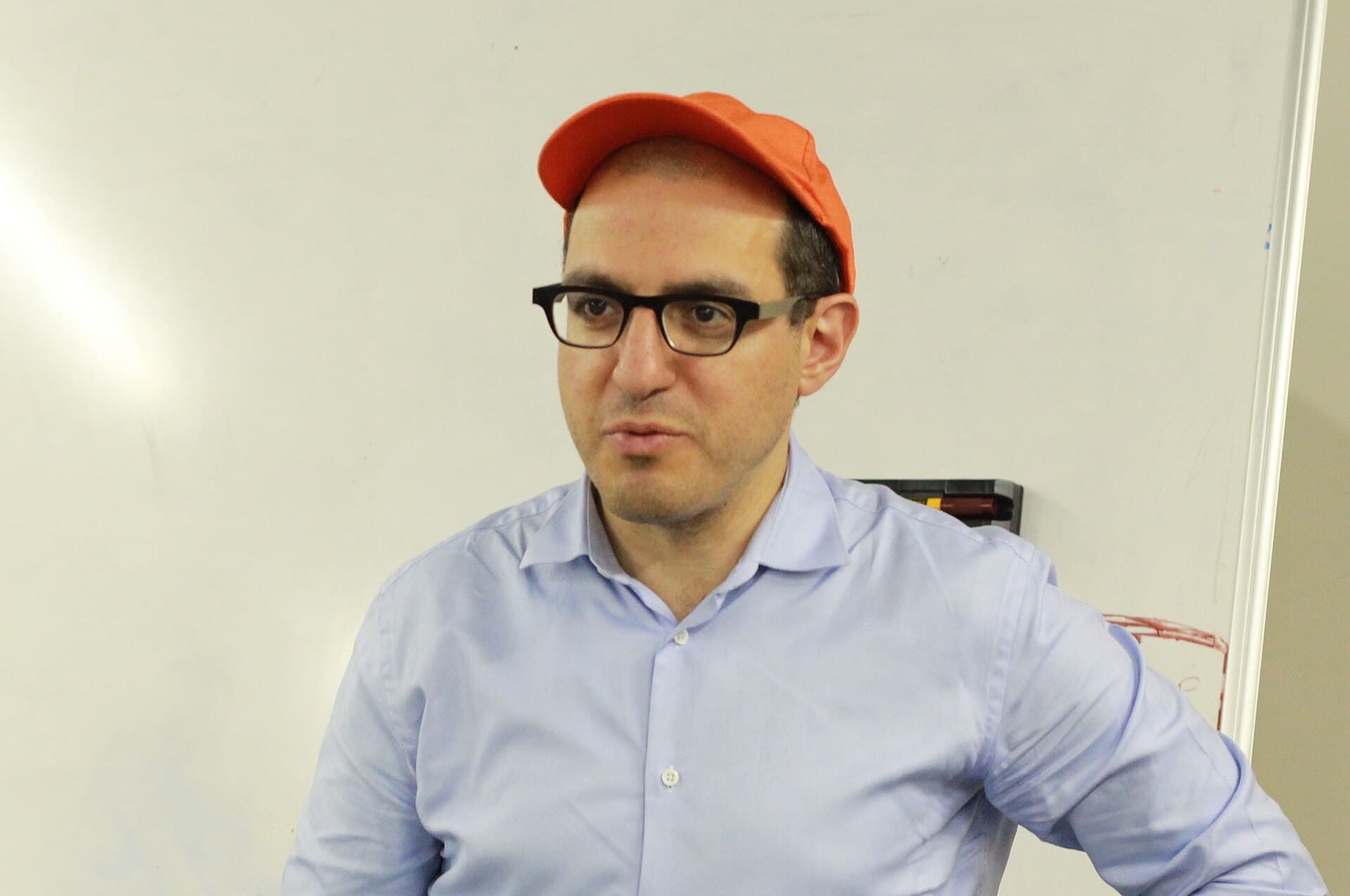
Jack Hidary is not panicking. Speaking in Abu Dhabi on a Monday morning, with Nvidia nearly 50 per cent off its high and the Nasdaq edging towards a bear market, the SandboxAQ founder called the rout "a healthy correction". "You need corrections like this to reassess where things are at," he said. Within hours, Nvidia's board reinstated Jensen Huang as chief executive, 11 days after his resignation.
Asked whether a change at the top would bring quantitative tightening to an industry reliant on circular financing, Hidary said: "I don't think we as an economy are going to go through that. I do think some neoclouds are going to go through that." He attributed the wider sell-off to market nerves, year-end positioning and rising interest rates pulling money out of equities, citing Federal Reserve chairman Kevin Warsh and other central banks offering good rates. His test for any correction: "Was there anything fundamentally different in the economy from one day to the other? Or is it just market sentiment?" He believes it is the latter.
Hidary calls 2027 "the year of convergence", when AI shifts from commodity internet data to "verticalised, domain-specific data sets in energy, in bio, in quantitative finance". Large language models, he argues, have been ticked off as a boardroom box; the next wave will be large quantitative models trained on scientific and numerical data. "A model trained on cat pictures and Reddit isn't the model we need to actually make these new batteries," he said. SandboxAQ's models are now accessible through Claude under a partnership with Anthropic.
He sees the bigger opportunity in energy, commodities, agriculture and industry, which he says make up "80 per cent of the GDP". Less than 2 per cent of electricity on the US grid can be stored, he says, pointing to Egypt, which he says has secured $127 million from the European Bank for Reconstruction and Development and Germany's DEG to install batteries at the Benban Solar Park. "To get AI sovereignty, you must first start with the basics of energy sovereignty," he said. Data centres, in his view, are "a real-estate play, not an AI play" - "buildings and warehouses, essentially, with electricity".
Finance is where he expects quantitative AI to cut deepest. "Ultimately, it's numbers and equations, not words, that drive banks, hedge funds, investment funds," he said. "Language models, fantastic for content, but not great on numbers." He argued the lessons of 2008 and recent US bank failures should push the industry "beyond Monte Carlo" in risk management. On talent, he pointed to Abu Dhabi's Mohamed bin Zayed University of Artificial Intelligence, which he says has grown from 200 students to 900 in three years. "That is a very good sign for the health of AI over the next three to five years."


