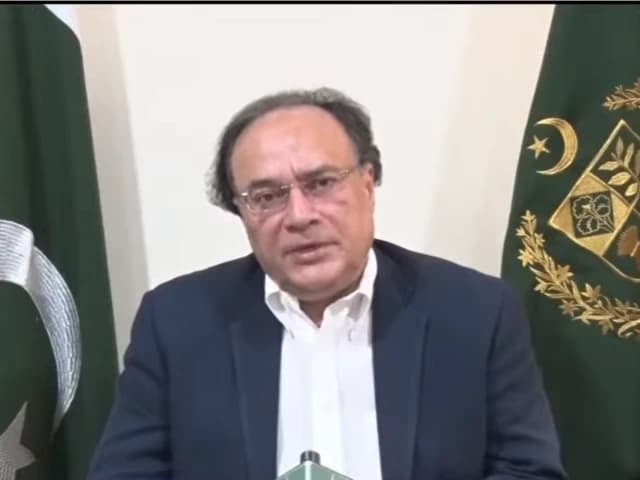
Shehbaz sets up committee to weigh JI relief plan as fuel levy cut to Rs63
Prime Minister Shehbaz Sharif has set up a committee to examine Jamaat-e-Islami's proposals for economic improvement and public relief and to oversee their implementation, as pressure mounts over petroleum prices and the cost of living.
Talking to a JI delegation led by party chief Hafiz Naeemur Rehman in Islamabad, the prime minister said the government would consider the recommendations seriously and pursue them in good faith and without delay. He said the committee would review the proposals and track their implementation, expressing hope they would bring economic improvements and further relief.
Sharif defended the government's earlier response to the first surge in petroleum prices after the outbreak of the Iran-US war, saying an immediate nationwide subsidy programme was introduced because there was too little time to design a targeted mechanism. The federal government spent Rs128 billion on it, later joined by the provincial governments, and after a further rise in global oil prices the subsidy was extended to motorcyclists, rickshaw operators and owners of vehicles up to 800cc. The prime minister said the programme directly benefited around 20 million people and nearly 100 million indirectly.
Speaking to reporters afterwards, Rehman said the government had agreed to several relief measures but JI would keep pressing its remaining demands, with its next course of action to be announced at a rally at Minar-e-Pakistan in Lahore on Nov 29. He said fuel relief would be extended to owners of vehicles up to 1,000cc and assistance given to farmers with up to 12.5 acres, including relief related to tractors. On the petroleum levy, he said its impact had been reduced from Rs80 to Rs63, with the matter to be settled before the next budget, and that the government had agreed not to factor in the levy in that budget and to phase out official vehicles above 1,600cc as an austerity measure.
Rehman also said the government had agreed to review agreements with independent power producers, claiming revisions had helped cut electricity bills by 25 per cent and that power tariffs had fallen 30pc over the past two years. He acknowledged that not all of JI's demands had been accepted, vowed to continue the campaign for further relief, said an implementation committee would monitor progress, and called for the lifting of the emergency and governor's rule in Khyber Pakhtunkhwa.