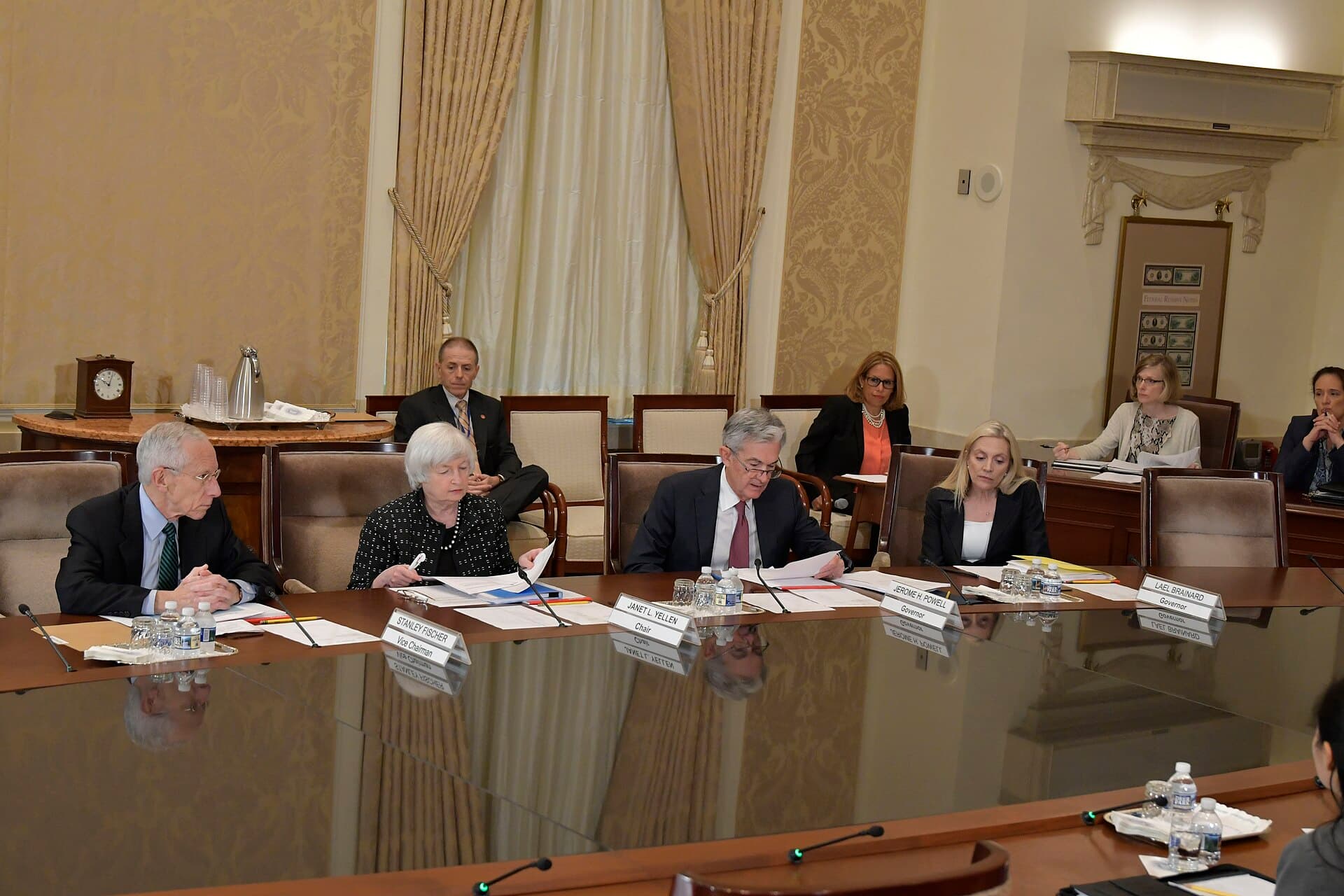
Warsh's higher-for-longer Fed leaves CRE lenders picking their deals
Commercial real estate lenders are still open for business under Federal Reserve Chair Kevin Warsh, but they are choosing their deals more carefully and taking longer to close them as higher-for-longer rates bite.
"Deals haven't disappeared, they're just taking longer," said Joseph Fingerman, president of CRE at Peapack Private Bank & Trust. "As rates change during the due diligence process, both lenders and borrowers may need to revisit their assumptions." Peapack remains active and sees opportunities in "well-located properties with experienced, well-capitalized sponsors", he said.
The rate backdrop is the test. The Federal Open Market Committee raised its benchmark rate on Sept. 16, its first increase since July 2023, then paused on Oct. 28. Its September dot plot signalled one more hike by the end of 2026, with the federal funds rate holding near 4.1 percent through the end of 2027. The 10-year Treasury yield crossed 5 percent on Sept. 14 and closed at 5.12 percent on Nov. 12, up 12 basis points, after the latest inflation data.
J.P. Morgan Chase has prepared for this. Kurt Stuart, co-head of commercial term lending, said the bank stayed disciplined as rates rose and expects an active multifamily lending year in 2027. "Whether interest rates are up or down, it's more about whether or not a market participant is prepared for that situation, and this is a situation we've forecasted for a long time," he said. He noted J.P. Morgan is the largest non-government-sponsored multifamily financier in the US, serving around 19,000 rental housing operators, and said long-term bond volatility is what most often holds back transaction volume.
EagleBank stayed largely out of CRE lending in 2024 and 2025 because of heavy office exposure in the Washington, D.C. region, said chief financial officer Eric Newell. More than $1 billion of CRE payoffs in the past year cut its CRE concentration ratio to around 250 percent from nearly 400 percent in 2023, and it is re-entering the market with new hires. Still, he warned that elevated Treasury yields and high inflation are pressuring cap rates: "If they underwrote a loan and there was a 60 percent loan-to-value and then you fast forward to today's environment, that 60 percent loan-to-value could be something much higher, and that could compromise the bank's ability to resolve any type of situation that might come up with a project."
Warsh has kept to the Fed's 2 percent inflation goal, last met in February 2021, while pushing to drop forward guidance and skipping the dot plot himself. Fingerman said that leaves markets to price the uncertainty: "When the Fed stops telling you where it's headed, the bond market fills in the blanks and charges more for the uncertainty."
What it means for Pakistan: The story carries no direct Pakistan angle: it concerns US banks, US commercial property and Federal Reserve policy. Pakistani readers with exposure to US dollar assets or property funds would feel it only through global borrowing costs, and the source gives no Pakistani figure, institution or reaction to support a stronger link.