Analyst defends Pakistan equity case after eight months of KSE-100 consolidation
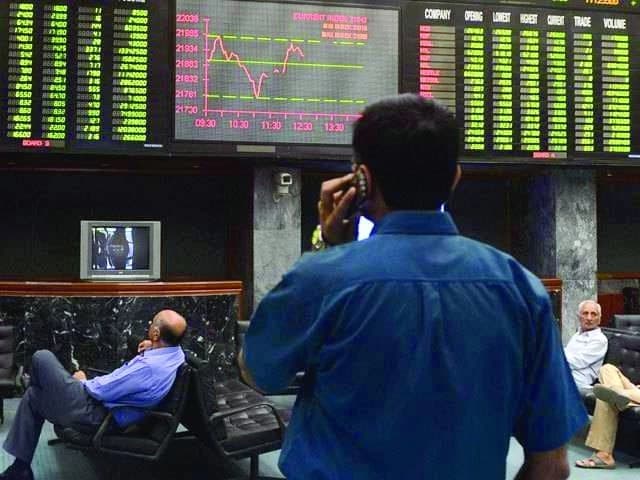
The KSE-100's roughly eight-month consolidation has left Pakistani investors questioning equities and looking towards property or fixed income, but an independent economic analyst argues that a pause after an exceptional advance does not invalidate the investment case. The benchmark closed near 168,637 on 1 October, below the peak above 180,000 reached in January 2026, after a run from around 40,000 that began in June 2023.
The analyst attributes that rally to improving fundamentals, liquidity and sentiment, citing a policy rate cut from 22% to 11.5% and a re-rating from about 6x to 8x earnings. In a Tribune column in August 2025, "KSE-100 races to 150,000 – too fast, too soon?", the analyst flagged the speed of that re-rating, and wrote on 23 February 2026 that the index's long-term average price-to-earnings multiple of 8x to 9x had been reached relatively quickly. The implication, the analyst says, is that earnings must eventually catch up with expectations. On the macro side, the analyst gives the government credit for navigating a prolonged regional war, pointing to September's $3 billion Eurobond, sovereign-rating upgrades and fiscal consolidation, and notes that SBP still projects the FY27 current-account deficit within 0-1% of GDP. UAE deposits were repaid, with Saudi support helping to finance the outflow, and the analyst expects successful IMF reviews to unlock $1.2 billion later this year, subject to board approval.
Borrowed reserves must ultimately give way to export earnings and investment, the analyst writes, adding support for another two to three years of reform continuity under an IMF framework if necessary. The export package is described as a tangible bridge towards growth: budget measures reduced collection on export proceeds from 2% to 1.25%, with a super-tax exemption for qualifying exporters, alongside working-capital financing at 8.5% and long-term financing at 2% for two years followed by 5% for eight. Rebates apply to incremental exports — 1% where annual growth is up to 10% and 2% where it exceeds that. The analyst calls the redirection of fiscal space away from remittance incentives, which reportedly cost around Rs76 billion last year, towards productive capacity sensible, and suggests policymakers review Naya Pakistan Certificate yields against global alternatives. Around Rs60 billion has been disbursed under the prime minister's Apna Ghar programme, with a substantially larger approved pipeline, and progress towards privatising Fesco, Gepco and Iesco could prove a stronger catalyst than another financing announcement, provided ownership changes deliver investment, lower losses and better service.
Energy remains the principal threat in the analyst's assessment. Refined-product prices, freight and insurance can magnify a crude-oil shock, while disrupted LNG supplies through Hormuz and reliance on expensive replacement fuels threaten electricity costs, industrial margins and household purchasing power; sustained oil prices below $100 would improve the outlook. A sudden 4-5% rupee depreciation, or a rate increase exceeding one percentage point, could postpone recovery by several quarters — stress scenarios, the analyst notes, rather than mechanical thresholds. Companies are adapting: Nishat Mills and DG Khan Cement have recently announced solar-and-battery projects and Lucky Cement is expanding renewables, while textile firms including Nishat Mills, Indus Dyeing and Kohinoor Textile are installing large-scale solar, wind and battery capacity. The analyst warns that industrial migration away from the grid leaves remaining consumers carrying more fixed costs, and says competitive incremental energy pricing and the removal of industrial cross-subsidies must accompany distribution company reform.
Market participation offers another signal, according to the analyst: the PSX had 656,218 investors in September, roughly 0.25% of Pakistan's population, against 127 million unique investors reported by India's NSE in January, about 9% of that population, though reporting dates and coverage differ. Recent IPOs and a listing pipeline spanning electronics, dairy, poultry, tyre exports, property, oil marketing, pharmaceuticals and credit information broaden the opportunity set, but subscriptions are no substitute for valuation discipline. Profitability is real, the analyst notes, with KSE-100 companies earning Rs2,000 billion in fiscal year 2026. For long-term savers, the analyst argues that diversified shares or equity funds overcome the practical barriers to property — large deposits, title verification, transaction costs, maintenance and slow exits — and recommends accumulating quality on weakness over a five- or ten-year horizon, reinvesting distributions and avoiding leverage. Expectations should normalise towards a 15-20% nominal annualised return, the analyst says, a pace at which capital roughly doubles in five years and quadruples in ten. If war risks recede and earnings strengthen, the analyst's conditional December 2027 scenario is 225,000-250,000, although a valuation near 9x forward earnings would require commensurate earnings growth and dividend yields, and a sustained 10-12x multiple would demand export- and investment-led growth above 5%, better ties with eastern and western neighbours, political accommodation, a widening tax-to-GDP ratio, improved security in Balochistan and Khyber-Pakhtunkhwa, and goodwill converted into foreign direct investment.