Pakistan has had 25 IMF programmes but still cannot implement basic reforms, Ishrat Husain says
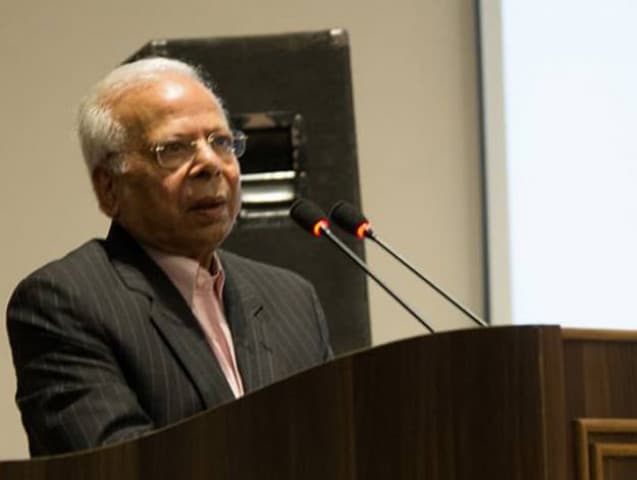
Pakistan has borrowed from the World Bank for structural reform an untold number of times and signed 25 IMF programmes, yet still struggles to implement the basic reforms that would put it on a sustainable path, Dr Ishrat Husain said as he accepted a lifetime achievement award on Tuesday.
Husain, who ran the State Bank of Pakistan from December 1999 to the end of 2005, took over when reserves stood at $300 million amid sanctions and international isolation. When he left, they were $13 billion, trust in banks had been rebuilt, and the central bank had been transformed. He contrasted that record with the countries he advised as a World Bank official: Ghana, which embraced structural reforms and is now a success story, and Azerbaijan, which he urged to set up a sovereign wealth fund that now holds $75 billion of assets. Pakistan set up its own fund in 2023 but has not made it operational amid IMF concerns.
Current SBP Governor Jameel Ahmad said Pakistan's economic situation "remains challenging", and Finance Minister Muhammad Aurangzeb conceded that reform is unfinished. As chairman of the Cabinet Committee on State-Owned Enterprises, Aurangzeb said he took Husain's reports as a starting point. "We still have a long way to go, and some of the folks are not happy with that," he said. Habib Bank Limited chairman Sultan Ali Alana called Husain "an institution in himself", and SDPI's Dr Abid Qaiyum Suleri said he was "Google for us when Google was not that popular in Pakistan".
Husain's own test of a reformer is institutional, not personal. "Institutional builders must be such that the institution remains the same after they leave," he said, telling young Pakistanis that "your beginning need not determine your destination". The award, from the Sustainable Development Policy Institute, recognised a public career that began in 1964 and has since spanned the central bank, government reform commissions, advisory roles to prime ministers and the World Bank.
The three dates in the story — the 1999 crisis, the 2005 turnaround and the same challenges in 2026 — are the point. Pakistan has produced reformers of Husain's calibre, but the country keeps returning to the same impasse between brief spells of growth.