Pakistan, World Bank discuss reforms and investment-led growth

Pakistan's finance minister, Senator Muhammad Aurangzeb, met World Bank and International Finance Corporation officials in Islamabad to discuss the government's reform agenda and the shift from macroeconomic stabilisation to investment-led growth, according to a statement carried by Business Recorder.
The World Bank delegation comprised Sandeep Mahajan, Regional Practice Director for the Prosperity Vertical for the Middle East, North Africa, Afghanistan and Pakistan, Bolormaa Amgaabazar, Country Director, and Simon Andrews, Division Director at the IFC. Mahajan congratulated Pakistan on restoring macroeconomic stability and commended the government's handling of the recent crisis arising from regional conflict, attributing the country's ability to manage external pressures to buffers built during stabilisation and a timely policy response. The representatives stressed that those gains should be sustained through continued reforms and effective implementation.
Aurangzeb said the government's priority was to make stability durable and convert it into sustainable, investment-led and export-led growth. He cited Pakistan's regained access to international capital markets, including a recent $3 billion Eurobond issuance with five- and ten-year maturities, and spoke of securing a pathway to further credit rating upgrades and a stronger sovereign credit profile. He also raised the need for a credible transition framework that maintains fiscal discipline and addresses external-sector vulnerabilities.
The two sides discussed policy continuity as a requirement for progress, with Aurangzeb noting that investment and productivity depend on a predictable policy environment and consistent implementation. Talks also covered the growth and jobs agenda, improving the regulatory environment, mobilising infrastructure financing, and privatisation, including the importance of clear regulatory frameworks and credible post-privatisation arrangements. Both sides reaffirmed their cooperation on structural reforms and translating reform gains into investment and employment.
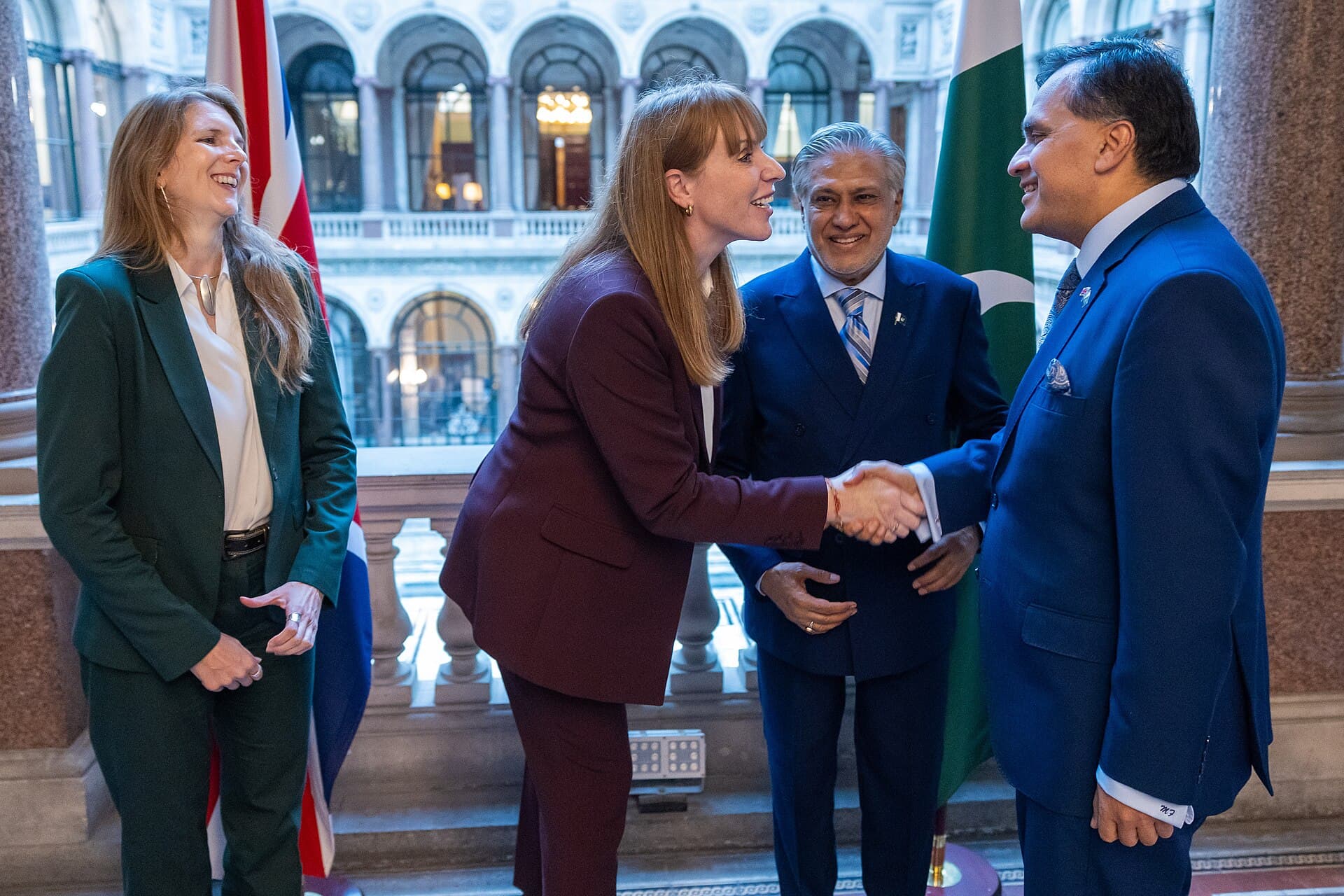
Image: AgnosticPreachersKid / CC BY-SA 3.0