Aurangzeb says twin deficit fell to 2.6% of GDP as tax reforms widen
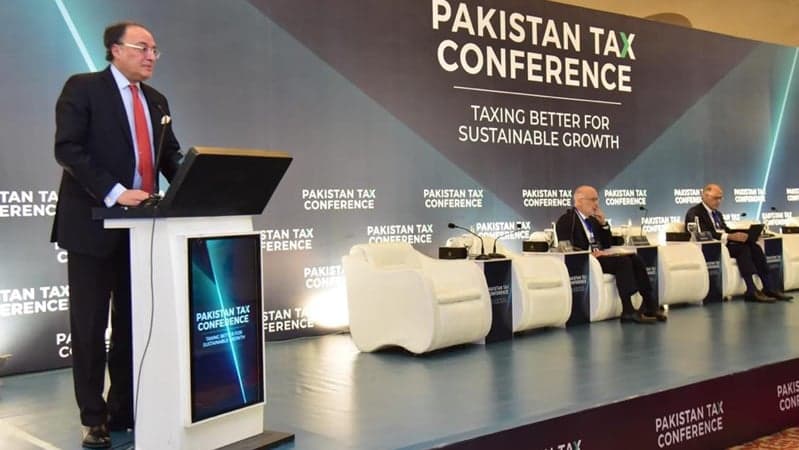
Pakistan's twin deficit has fallen from a cumulative 12.5 per cent of GDP to 2.6 per cent, Finance Minister Muhammad Aurangzeb said on Tuesday, presenting the shift as evidence that macroeconomic stabilisation and fiscal consolidation are taking hold.
Addressing a two-day workshop on tax reform organised by the Ministry of Finance and the International Monetary Fund, Aurangzeb said the country had recorded a 22-year low fiscal deficit in the last fiscal year and primary surpluses for three consecutive years. He said the Federal Board of Revenue's tax-to-GDP ratio had risen from 8.8 per cent to 10.3 per cent, with tax revenues up 40 per cent over the last two fiscal years. Of the 1.5-percentage-point gain in the ratio over two and a half years, he attributed 0.9 points to enforcement and 0.6 points to new policy measures.
The minister said the government would tighten enforcement further, curb revenue leakages and broaden the tax base, and pointed to an FBR transformation programme covering staffing, processes and technology that he said is led by the prime minister and reviewed weekly. He named broadening the base, simplifying the tax code and ensuring policy predictability as priorities, warning that frequent, unexpected tax changes undermine private investment. He also cited political consensus, stronger institutions, taxpayer trust and federal-provincial cooperation as prerequisites for reform.
On the external side, Aurangzeb said foreign exchange reserves had recovered from about two weeks of import cover to more than three months, reaching a record high, and argued that the quality of reserves mattered as much as their volume. He said external debt had grown by around $4 billion over the preceding four years, against annual increases of $6 billion to $7 billion between 2015 and 2022. He said the economy had returned to positive growth after a 0.3 per cent contraction, but stressed the need for export-led rather than consumption-driven expansion.
Jihad Azour, director of the IMF's Middle East and Central Asia Department, said Pakistan had made significant progress in restoring stability, rebuilding confidence and strengthening external buffers despite repeated shocks, and credited the finance minister, the government, the prime minister and parliament. He said the next milestone was to turn stabilisation into stronger, more durable growth, and called for broad-based, fair and predictable tax reform to lift private investment and job creation under the Fund's Extended Fund Facility.