Pakistan and International Monetary Fund reach staff-level agreement on reviews

The International Monetary Fund published a staff-level agreement with Pakistan on the fourth review of the country's $7 billion Extended Fund Facility and the third review of its $1.4 billion Resilience and Sustainability Facility on 7 October, at the conclusion of a two-week mission. Reaching the agreement at the concluding stage of the mission, rather than after it as in the previous review, indicates in the assessment of the Business Recorder editorial that the Fund accounted for external shocks, including the effect of the Middle East conflict on the economy, and that the authorities have adhered to its prescriptions as far as possible.
In its press release, the Fund said real GDP growth reached 4 per cent in the first three quarters of FY26, and that although higher energy prices and supply disruptions weakened the momentum somewhat, FY26 growth is estimated at 3.6 per cent. It said headline inflation, after peaking in May, moderated to about 10.3 per cent in September while core inflation remained contained, that the current account was broadly balanced in FY26 supported by strong remittances, and that gross reserves rose to about US$21½ billion by end-September. The data pertained to last fiscal year ending on 30 June, with the exception of inflation.
The editorial disputed parts of that characterisation. It noted that Pakistan Bureau of Statistics data put headline inflation at 3.5 per cent in May, which it said meant inflation had not peaked then, and argued that a September reading of 10.3 per cent year on year, down by 0.8 per cent from 11.1 per cent in August, is unlikely to feel like a moderation to the 44.7 per cent of Pakistanis the World Bank estimates live below the poverty line. Core inflation, non-food and non-energy, declined from 9 per cent in May to 8.6 per cent in September, the editorial said. It further argued that the pickup in growth owed less to the contractionary monetary and fiscal policies agreed with the Fund than to higher consumption, particularly as food and energy costs rose, and to a low GDP growth base in previous years.
On the external accounts, the editorial said remittances rose unexpectedly given the Middle East conflict, with reports attributing the increase to Pakistani overseas workers choosing not to return home while other nationalities did. It put total foreign exchange reserves at a historic high of $21 billion, which, with petroleum and products as well as fertiliser and food prices elevated by the conflict, cover roughly 3.2 months of imports, compared with the three-month minimum multilateral lenders generally require. The editorial also flagged concern that rising imports of raw materials and semi-finished goods could revive a boom-bust cycle.
The Fund said sovereign rating upgrades and renewed international market access point to stronger policy credibility, while warning that risks remain high from geopolitical tensions, volatile energy prices, tighter global financial conditions and trade disruptions. The editorial cited last month's two-phase $3 billion Eurobond issuance on the London Stock Exchange, comprising $1.75 billion at 7.5 per cent for five and a half years and $1.25 billion at 7.9 per cent for 10 years, as support for that claim, noting the yields are at least double those available from multilateral and bilateral sources and that the caretaker finance minister in 2023 had declared the market too expensive to secure. The release also carried a graph, sourced from the Fraser Institute, the World Bank, World Wide Governance Indicators, Economic Freedom of the World, Budina et al. and staff calculations, describing large catch-up potential for Pakistan on governance, business regulation and external sector indicators. The detailed report, including agreed structural benchmarks and any waivers or upfront actions, is usually published at least a month after the mission ends.
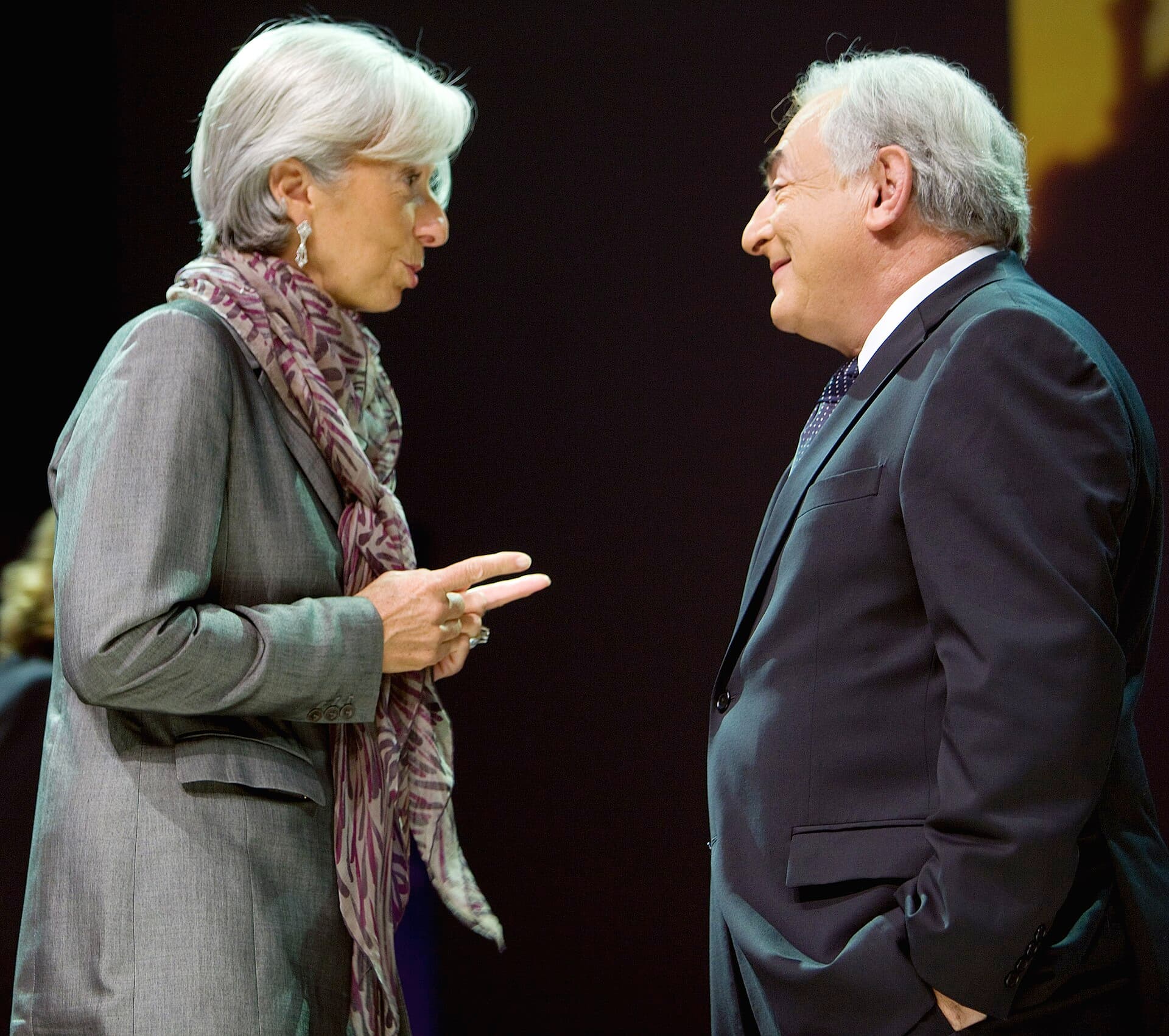
Image: APK / CC BY 4.0