Aurangzeb rules out consumption-led growth as twin deficits fall to 2.6pc of GDP
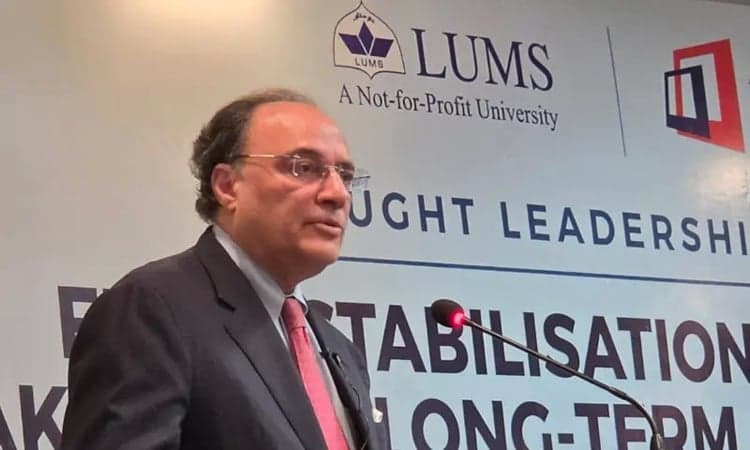
Pakistan's combined fiscal and current account deficits have fallen from 12.5pc of gross domestic product to 2.6pc, Finance Minister Muhammad Aurangzeb said, as he ruled out a return to liquidity-fuelled, consumption-led growth. Speaking at Lahore University of Management Sciences at an event organised by the American Business Forum, he said the fiscal deficit had dropped to a 22-year low and the country had posted primary surpluses for three consecutive years, with the current account deficit narrowing to around 0.1pc of GDP on the back of remittances and IT exports.
"We are very clear: no matter how much pressure there is, we are not going to go for liquidity-fuelled, consumption-led growth," Aurangzeb said, arguing Pakistan could not afford to repeat the import-dependent cycle that produced balance-of-payments crises and forced it to seek support from lenders of last resort. He said the latest budget had tried to point the economy towards exports through the elimination of super taxes, cuts to tax slabs and financing for exporters at 4.5pc.
On tariffs, the minister said domestic industries had been protected for too long without sunset clauses. "We are in year two of the tariff reform, and we are going to continue with that; there is no turning back," he said, adding that the aim was to cut the cost of raw materials and intermediate goods for exporters despite concern over the timing.
Aurangzeb pointed to IT export services, which he said had risen from less than $1 billion to $4.6bn and were projected to reach $5.5bn this fiscal year, and to foreign exchange reserves now covering more than three months of imports against two weeks during the crisis. He cited three credit-rating upgrades since April last year and a recent Panda bond whose order book was twice its size, which he said reflected investor confidence beyond the IMF programme due to end in October next year. External debt payments, he added, had fallen from $26.5bn to $21.5bn this financial year, while domestic debt management had cut debt-servicing costs to Rs6.9 trillion against a budgeted Rs8.2tr.
He said growth had to generate jobs, drawing a contrast with the neighbour where, he argued, 7 to 8pc growth had not created enough employment. Restoring investor confidence, he said, also required clearing around $4bn in outstanding dividend and profit repatriation obligations, and he cited 11 initial public offerings last year, a 20-year high, and five so far this year. He named climate change and population growth, at 2.55pc, as major challenges, and said new civil-service entrants had moved from defined-benefit to defined-contribution pensions, with talks with the armed forces ongoing.