
Record El Niño to keep extreme heat going into 2027, WMO warns
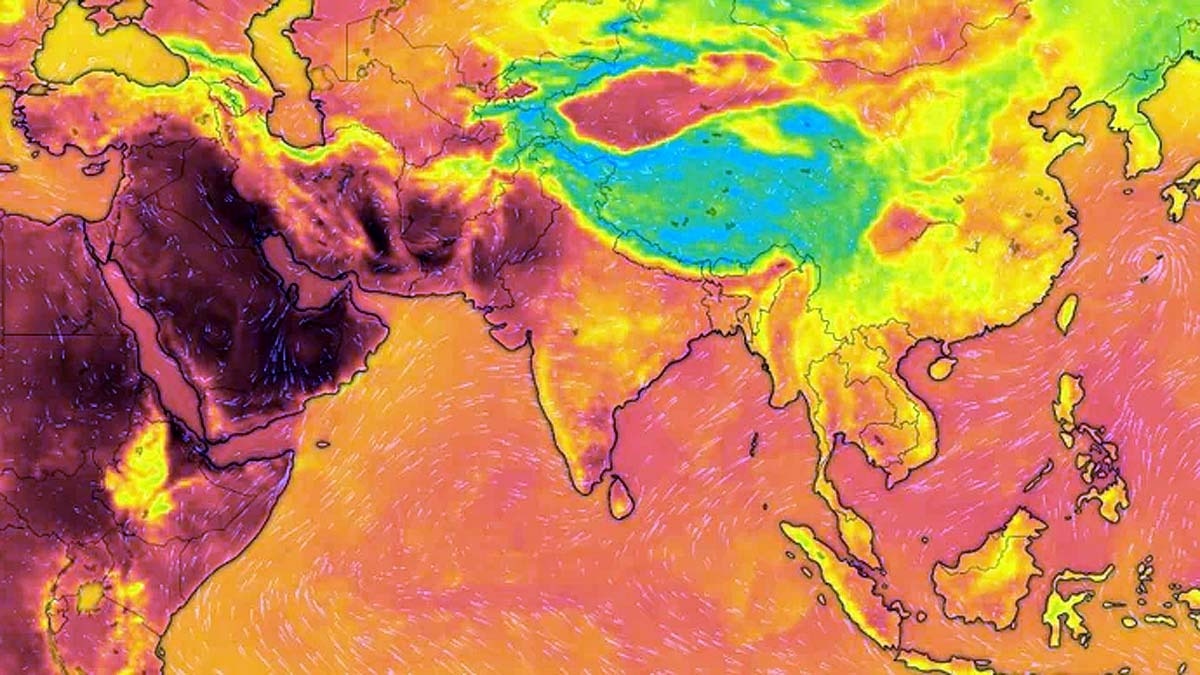
Extreme temperatures are set to continue into next year as a strengthening El Niño adds to warming caused by human activity, the World Meteorological Organization (WMO) said in its State of the Climate Update 2026, released ahead of the COP31 climate talks in Antalya, Türkiye.
Global mean surface temperature from January to September 2026 was about 1.47°C above the pre-industrial average, the WMO said. It expects the figure to rise further by the end of the year because of El Niño, which has been building since August and is expected to become the strongest on record by December.
Each of the past 12 years ranks among the warmest on record, and the past four occupy the top places. About 90% of the excess heat trapped by greenhouse gases is absorbed by the ocean, and 2026 is on track to be the tenth consecutive year of record ocean warmth.
WMO Secretary-General Celeste Saulo said El Niño does not add new heat to the climate system but releases heat stored in an ocean that is now the warmest ever measured. She described El Niño as a risk multiplier, with heatwaves, tropical cyclones and rainstorms intensifying faster than historical baselines.
UN Secretary-General António Guterres said a "supersized" El Niño was colliding with a planet already superheated by human-caused climate change. He urged leaders to cut emissions faster, accelerate the shift away from fossil fuels, and deliver the finance and protection vulnerable countries need.
The update records concentrations of carbon dioxide 53% above 1750 levels, methane 167% higher and nitrous oxide 26% higher. Global mean sea level reached a record high in 2026 and is rising at an accelerating rate. Glaciers lost more than 400 gigatonnes of ice in 2025, equivalent to about 1 mm of sea-level rise.
For the first time, the World Health Organization has classified the expected health impacts of El Niño as a health emergency. The WMO also warned that El Niño is raising agricultural risk in regions where food insecurity is already high.
South Asia features prominently among this year's extremes. In April, about 146.5 million people in India were exposed to an extreme heatwave with temperatures of up to 47°C. In late August, a Himalayan glacier collapse triggered a flash flood that killed more than 1,300 people in Nepal.
The findings bear directly on Pakistan, whose northern regions face similar glacier risks. Prime Minister Shehbaz Sharif was due to use his address to the COP31 leaders' summit to highlight melting glaciers and the growing danger of glacial lake outburst floods to vulnerable communities.
The WMO will publish its final State of the Global Climate 2026 report in March 2027.
