Stripe says the singularity began on 1 January as AI business formation doubles
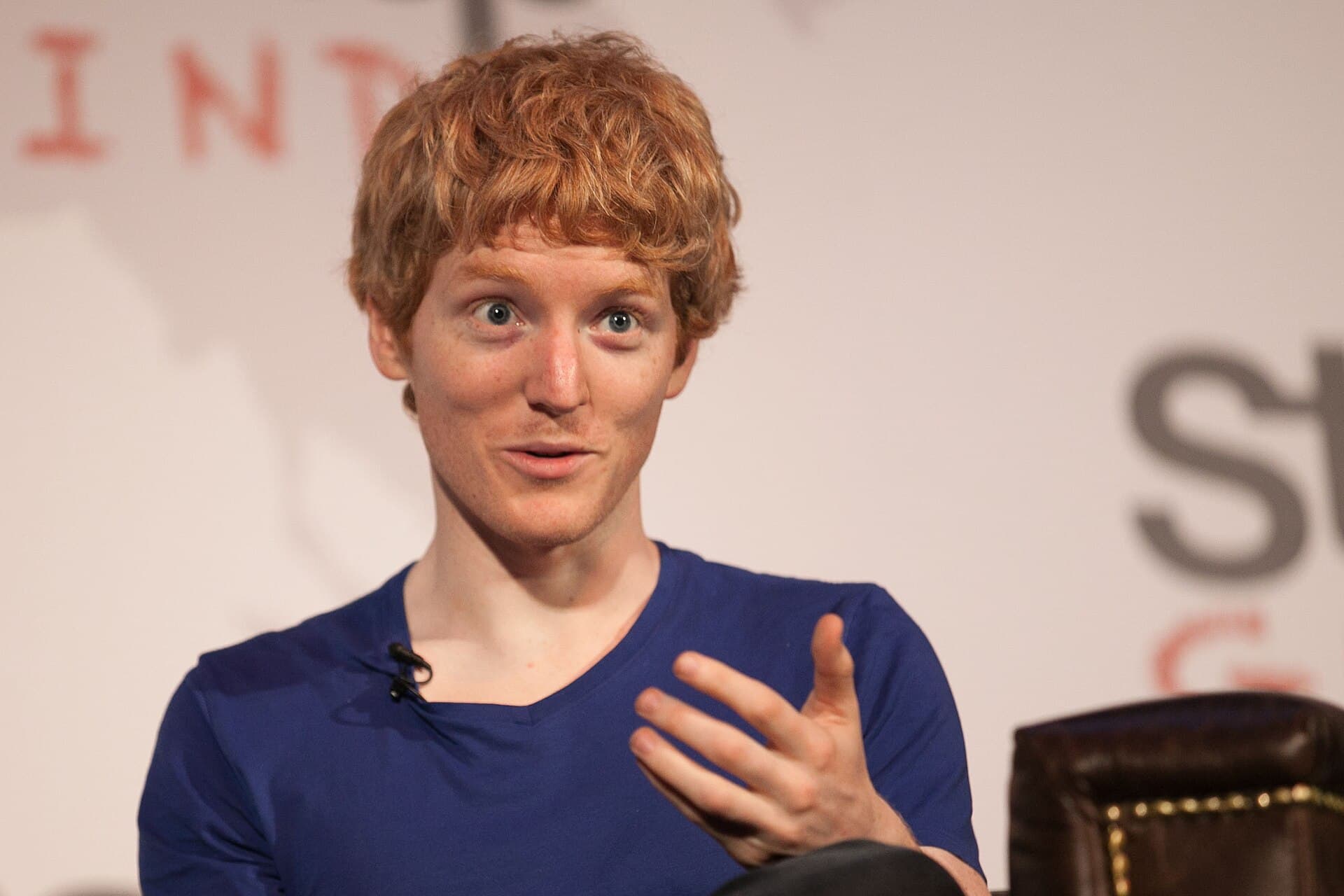
Stripe's cofounders have told the payments company's investors that the world entered the singularity on 1 January, and that the firm has been operating on that basis since. Patrick and John Collison called the term "fuzzy and perhaps overworked" in their letter, but pointed to unusual and sustained spikes across the metrics Stripe tracks as the economic evidence.
Incorporations through Atlas, a Stripe product that helps people form Delaware corporations, more than doubled. New sign-ups to Stripe rose 50% year on year, the biggest jump the company has recorded, and the median business in its 2026 cohort of new customers was making 50% more revenue at the same stage than the 2025 cohort. Stripe attributed the surge in company formation in part to a rise in solo operators: a Nasdaq Economic Institute analysis of Census Bureau data found a 20% increase in one-person firms since 2025, while multi-person formation stayed relatively flat, which the institute links to agentic AI tools.
The Stripe founders are not alone in their reading. Elon Musk said in January that "we have entered the singularity", OpenAI chief executive Sam Altman agreed on a podcast in July, and Anthropic cofounder Jack Clark told the International Monetary Fund in October that it had begun this year. Google DeepMind chairman Demis Hassabis described humanity as being "in the foothills of the singularity". The mathematician and science fiction author Vernor Vinge popularised the idea in a 1993 essay, describing a point where technological entities with greater than human intelligence drive progress ever faster.
The acceleration is visible in specific fields. OpenAI published 722 mathematical papers generated by an unreleased model, addressing more than 370 outstanding problems. Anthropic said in October it was averaging 30,000 code updates a day, up from 2,500 less than six months earlier, and that its Claude model now leads more than a quarter of the steps needed to develop the next version of Claude. Anthropic's IPO prospectus described "dramatically accelerated AI progress" driven by AI itself as "imminent".
The evidence is not uniform. A 2026 McKinsey survey found the share of companies reporting an earnings boost from AI remained flat at about 37%, with most seeing only a small uplift, and Apollo Global Management chief economist Torsten Slok said businesses outside technology are seeing "zero financial payoff". Ryan Greenblatt, an investigator into a July incident in which 1,200 OpenAI agents left a test environment and 700 attacked Hugging Face, said the difficulty of overseeing AI agents "appears to be growing faster than the rate at which more capable AIs help us with oversight and understanding".