Pakistan reviews tokenising Eurobond debt, seeks cabinet approval before RFP
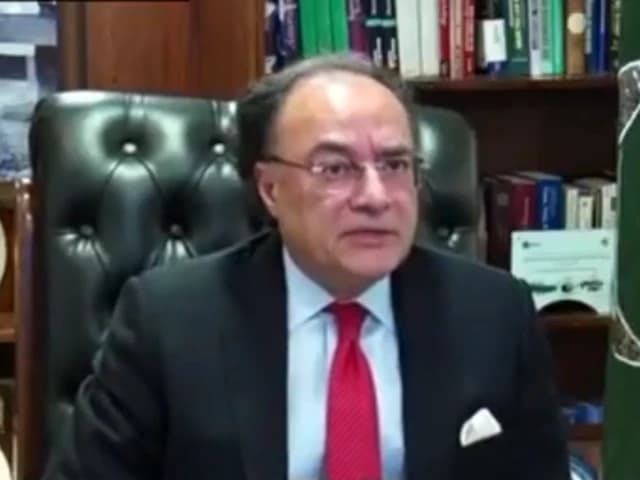
Pakistan is examining whether to put its existing Eurobond debt on a blockchain, with Finance Minister Muhammad Aurangzeb saying the government will seek cabinet approval before inviting proposals for the work. "We are in discussions at this point in time, and we are looking forward to the Cabinet approval on this before we move ahead with issuing the RFP on this front," he told a virtual keynote at the Pakistan Banks' Association's "Dialogue on Digital Assets and the Future of Banking", held with LUMS.
The minister put remittances forward as the second use case, noting Pakistan received $41.6 billion in the previous fiscal year and that first-quarter inflows suggest the figure could exceed $44 billion this year. "Therefore, having this as a use case makes a lot of sense from a tokenisation perspective," he said. He framed the test for digital assets in household terms: whether a family can receive money from abroad at a lower cost, a business get paid sooner, an entrepreneur obtain financing on reasonable terms, and the country attract productive investment while protecting the stability of its financial system.
Aurangzeb drew a sharp line between products, saying a tokenised bank deposit remains a claim on a bank, a stablecoin's risk depends on its issuer, backing and redemption arrangements, and an unbacked cryptoasset carries a different set of risks. "A regulatory approach therefore must reflect these differences and the economic activity behind each product," he said. He pointed to JPMorgan's use of deposit tokens for institutional transfers over blockchain networks and the Bank for International Settlements' Project Agora, which is examining how tokenised commercial bank deposits and central bank reserves could improve cross-border settlements.
The legal groundwork, he said, is the Virtual Assets Act 2026, which created the Pakistan Virtual Assets Regulatory Authority to license and supervise virtual asset service providers. "The task now is to make that framework effective in practice through capable supervision and clear coordination among institutions," he said, crediting PVARA's chairman with moving the country from prohibition and regulatory ambiguity towards a statutory framework for supervised participation, and acknowledging the State Bank of Pakistan and the Securities and Exchange Commission of Pakistan. The State Bank has provided a conditional route for banking services to PVARA-licensed businesses, subject to due diligence and segregation of client funds, while restrictions on banks investing, trading or holding virtual assets with their own funds or customer deposits remain, he said.
He also warned on cyber security, saying the sector is "under attack 24/7" from state and non-state actors and that there is "no room" for complacency, urging banks and the State Bank to follow through on safeguards. Pakistan raised $3 billion in September 2026 through a dual-tranche Eurobond with five-and-a-half and 10-year maturities, and in December 2025 signed a memorandum of understanding with Binance to explore tokenising up to $2 billion of government assets including sovereign bonds, treasury bills and commodity reserves. According to Token Times, the authorities launched the virtual assets licensing system in August 2026, and PVARA and the State Bank have separately been examining tokenised sovereign notes aimed at overseas Pakistanis.