KSE-100 ends week nearly flat as geopolitics keeps investors cautious
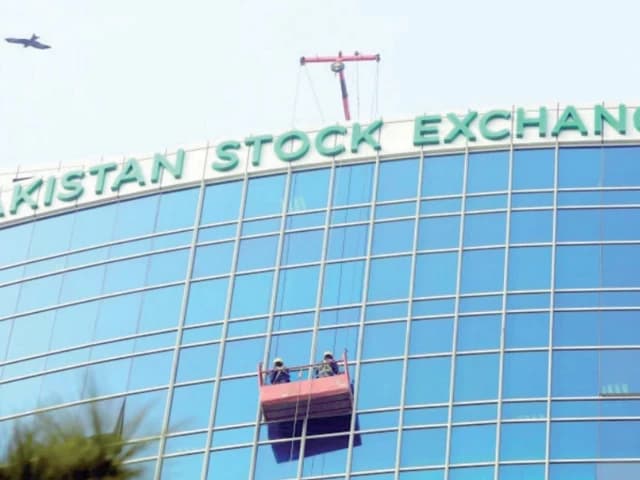
The Pakistan Stock Exchange's benchmark KSE-100 index closed the week at 170,765, down 119 points or 0.1% from 170,885 a week earlier, as geopolitical uncertainty and domestic political developments kept investors cautious. Arif Habib Limited said in its weekly commentary that geopolitical developments had kept the market flat, a view echoed by Wadee Zaman of JS Global, who said local and geopolitical uncertainty continued to weigh on investor sentiment.
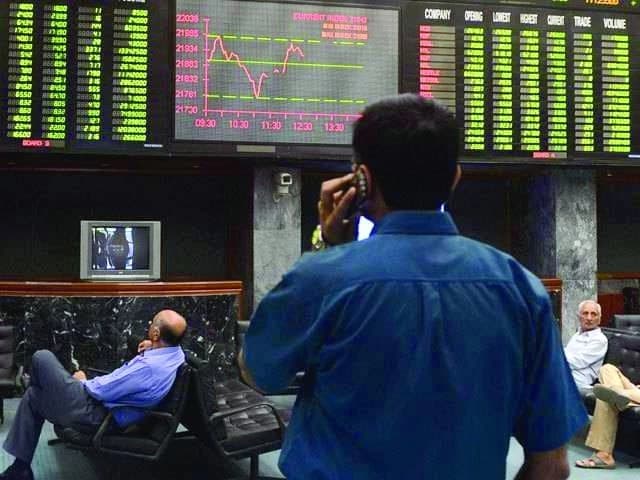
Trading was range bound through most of the week. The index gained 269 points, or 0.16%, to close at 171,153 on the opening session, added 250 points (0.15%) at 171,402 on Tuesday amid falling oil prices, and rose 830 points (0.48%) to 172,233 on Wednesday. Sentiment turned on Thursday, the second-last session, when the KSE-100 fell 1,734 points (1.01%) to 170,499, before recovering 266 points (0.16%) on Friday to settle at 170,765. According to Arif Habib Limited, hopes of progress in US-Iran talks and softer crude prices supported the market early in the week before geopolitical concerns resurfaced and crude prices rose. Brent crude averaged $103.1/barrel, down 2.2% week-on-week.
On the energy front, Arif Habib Limited reported that power generation rose 5.1% year-on-year to 14,943 gigawatt hours (GWh) in Aug'26, the third-highest August generation on record, supported by higher hydel, coal, gas and wind output. Generation cost increased 38% year-on-year to Rs10.01/kWh due to a higher RLNG and furnace oil mix and elevated oil prices, prompting power distribution companies to seek a positive fuel cost adjustment of Rs1.73/kWh. Oil production improved 1.4% week-on-week to 68.5k barrels per day, mainly due to higher flows from Makori East, Maramzai and Mardankhel, while gas production decreased 2.5% week-on-week to 2,934 million cubic feet per day, driven by lower production from Mari, Uch, Kandhkot and Shewa. Pakistan's oil and gas reserves reached 3,720 million barrels of oil equivalent in Jun'26, with oil reserves up 15% year-on-year to 276 million barrels and gas reserves up 9% to 20,664 billion cubic feet; newly discovered fields added 53.5 million barrels of oil and 773 billion cubic feet of gas, while the country's estimated reserve life stood at around 19 years.
Four refineries — Attock Refinery, Pakistan Refinery, National Refinery and Cnergyico — signed upgrade agreements with Inter State Gas Systems (ISGS) under the Pakistan Oil Refining Policy for Upgradation of Existing/Brownfield Refineries 2023, as amended in Feb'24 and Aug'26. In a key development, four of Pakistan's five local refineries signed formal upgrade agreements with the government, paving the way for an estimated $6 billion investment over the next five years. Total liquid foreign exchange reserves rose 0.07% week-on-week to $26.8 billion, with State Bank reserves up 0.05% to $21.4 billion and banks' reserves up 0.15% to $5.41 billion; import cover was unchanged at 3.03 months. Petroleum prices were mixed in the latest revision under the daily pricing mechanism, with high-speed diesel falling to Rs412.12/litre during the week, while motor spirit reached Rs389.28/litre; domestic MS and HSD prices declined by Rs1.51/litre and Rs12.80/litre to Rs389.28/ltr and Rs412.12/ltr, respectively, following five consecutive weekly increases.
On the external front, Zaman noted that Pakistan and the IMF commenced talks for the fourth review of the $7 billion Extended Fund Facility, potentially paving the way for the release of the fifth tranche of $1 billion, while the ADB revised down Pakistan's FY27 GDP growth forecast to 3.7% from 4.5%. Pakistan secured $4.7 billion in foreign loans during 2MFY27, and profit and dividend repatriation declined 13.4% YoY to $557 million. In the latest Pakistan Investment Bond auction, the government raised Rs181 billion, with yields increasing by 20-75 basis points across different tenors. The State Bank's foreign exchange reserves remained stable at $21.4 billion, he said.
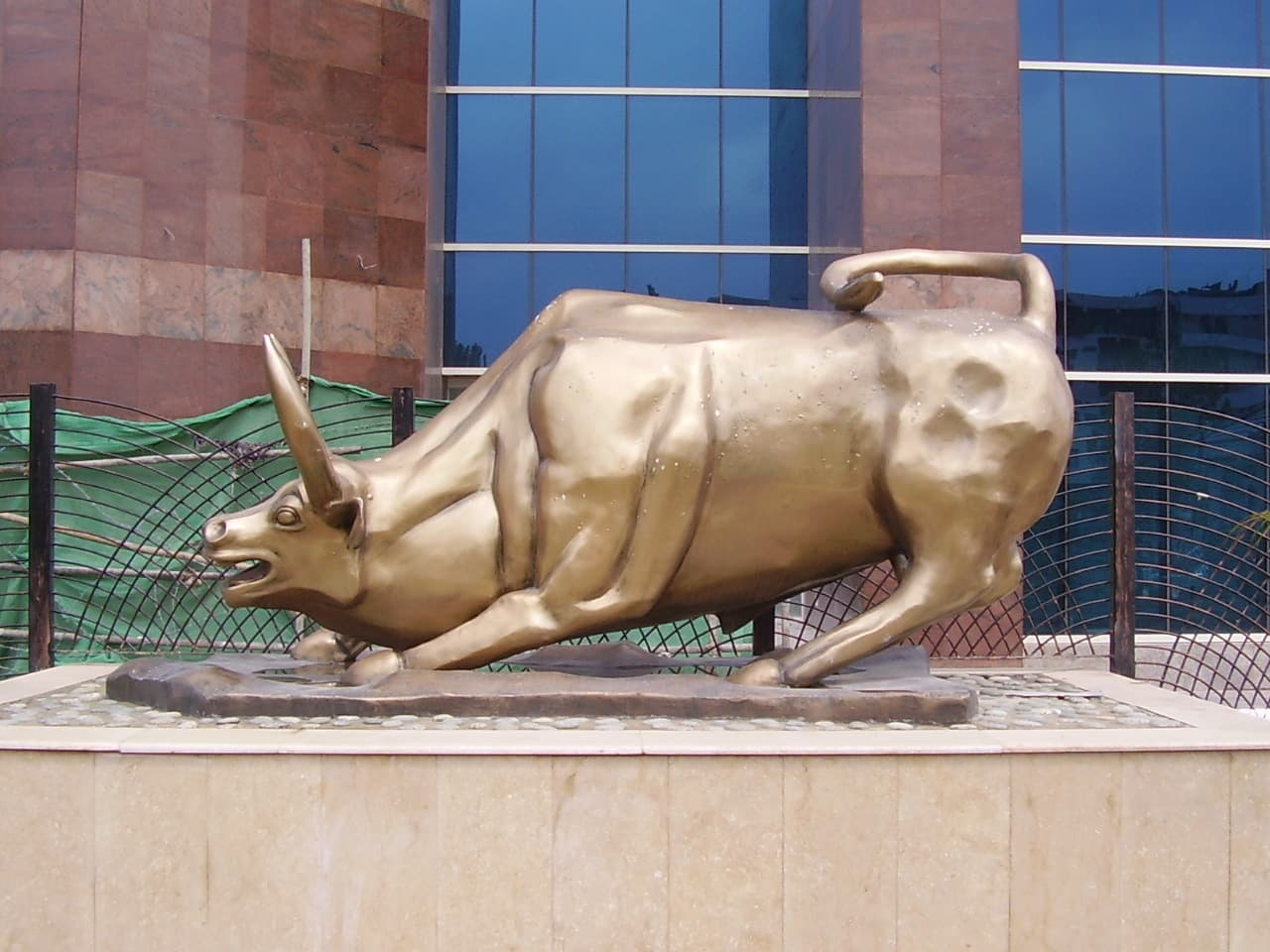
Image: Danish47 / CC BY-SA 3.0