Pakistan's economy "comatose" for three decades, Nobel laureate tells Harvard panel

Pakistan's tax-to-GDP ratio climbed from 8.8% in FY2024 to 10.3% in FY2025, a 1.5-percentage-point rise that lifted the measure above 10% for the first time in nearly a decade. The figure sits at the centre of a dispute over whether the country is finally breaking the resistance of entrenched interest groups or remains, in the words of one Nobel laureate, "comatose" for the past three decades.
The argument played out at a Harvard University conference on Pakistan themed "From Potential to Performance". Professor Acemoglu attributed three decades of weak performance to fragile institutions, thin investment in education and low tax collection, and warned that Pakistan lacks the digital infrastructure to keep pace with the artificial intelligence transition. Professor Atif Mian said the country lacked the strategic vision to confront elite capture and build inclusive growth, and cited its failure to electrify transport despite an energy crisis because it would not take on powerful pressure groups.
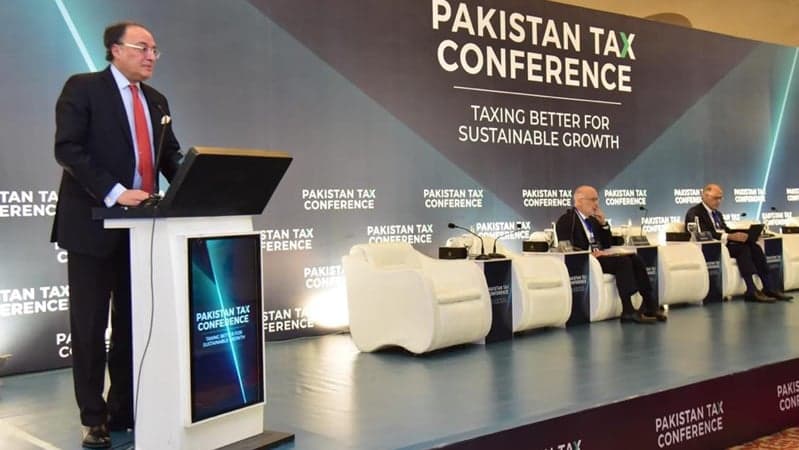
Finance Minister Muhammad Aurangzeb acknowledged the diagnosis but said political economy constraints had repeatedly delayed hard decisions, and that this was changing. He pointed to the five-year National Tariff Policy, now in its second year, provincial legislation to tax agricultural income, and the privatisation drive that has already sold Pakistan International Airlines and closed Utility Stores Corporation, with 27 state-owned enterprises in the programme.
The tariff opening has met less resistance than expected outside the automotive sector, and the predicted collapse of domestic industry and of import-related revenue has not materialised. On technology, the finance minister countered that Pakistan approved a National AI Policy in 2025, that IT exports have reached $4.6 billion and are growing at about 20% a year, and that the government plans to invest $1 billion in AI by 2030. The World Bank counts Pakistan among the leading hosts of data centres in the MENAP region alongside Saudi Arabia and the UAE, and the country has begun work on blockchain and digital asset regulation.
Solar tells a similar story of uneven progress: installed capacity is estimated at around 8,000 MW, and renewables have overtaken fossil fuels in electricity generation. The writer, a senior fellow at PIDE and a former ambassador and permanent representative to the World Trade Organisation, argues the picture is mixed but gives grounds for cautious optimism. Incremental change will not be enough, the piece concludes: the test is whether reforms survive political resistance and lift productivity, investment and exports, because Pakistan's shortage is not of ideas but of execution.