Pakistan public transport carries under 1% of commuters, new index shows
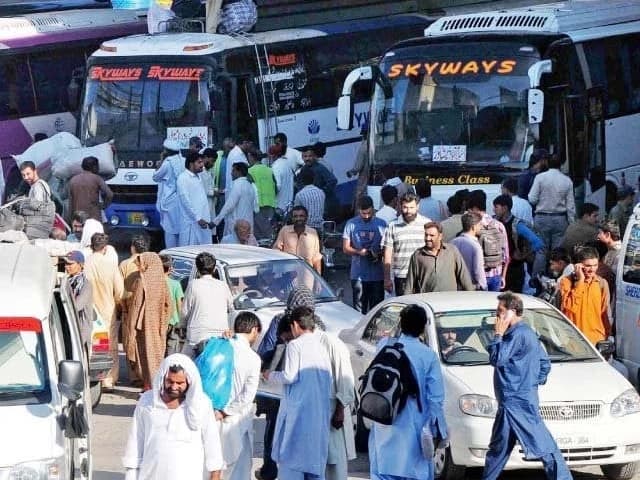
Public transport accounts for less than 0.5% of Pakistan's transport mix, according to a new mobility index that its authors say strengthens the case for shifting policy away from private cars and towards buses.
The BusCaro and Pakistan & Counting Mobility Index, launched on Thursday, found that the cost of travelling a kilometre across eight modes of transport fell 7.9% between May and September, from Rs10.48 to Rs9.65. But the index is weighted heavily towards privately owned vehicles: motorcycles, cars and rickshaws make up 98.7% of the total. It counts 36.7 million vehicles, including 30.3 million motorcycles and 5.1 million cars, based on the Pakistan Economic Survey 2024-25.
The index also showed a divergence between private and public transport costs. Fuel-only running costs for privately owned motorcycles, cars and rickshaws fell 7.5% over the period, while the public transport component rose 77%, from Rs1.22 to Rs2.16 per seat-kilometre. The index attributes that rise largely to the restoration of fares after Punjab's Metro Bus, Bus Rapid Transit and Orange Line services had been free for a period, meaning it reflects a change in fares rather than simply higher operating costs.
Mashood Ali Khan, an auto expert, said public transport played a crucial role in urban centres and megacities, citing networks in Europe, China and India that were developed to serve residents and businesses. "Routes and directions of public transport are very important so that they are convenient for the industry and residents coming within those routes," he said. He called on the government to introduce policies and incentives to expand public transport rapidly and move towards electric bus fleets, and proposed a coordinated national strategy in which the four provinces would identify their bus requirements for a federal long-term roadmap.
Khan argued that Pakistan should negotiate with established original equipment manufacturers to set up an electric bus plant locally rather than relying on imports, estimating the existing bus fleet at around 2,000 vehicles against annual demand of 18,000 to 20,000. He said infrastructure remained a major constraint, particularly in Karachi, where he said deteriorating roads and inadequate facilities undermined commuting. "Due to the lack of infrastructure, it looks like we are travelling on a desert safari," he said, adding that communication gaps between federal and provincial governments often delayed projects and raised costs. Public transport, he said, should be treated as a basic necessity and developed under a time-bound national policy rather than through disconnected provincial initiatives.