Karachi's scrap market keeps factories running as import costs bite
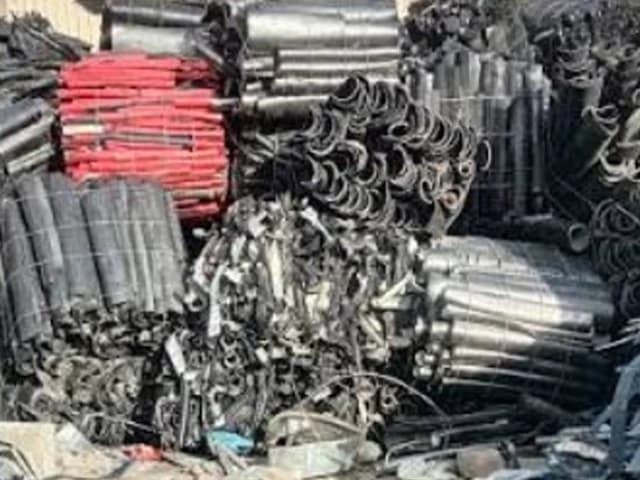
A cold storage compressor that would cost millions of rupees and weeks in customs clearance can leave Shershah's Kabari Market fully tested for a fraction of that, dealers say, and for many small plant operators that gap is the difference between a running production line and costly downtime.
The market's supply line runs directly through Pakistan's ship-breaking industry. Machinery salvaged from decommissioned vessels at Gadani — heavy-duty marine refrigeration compressors, industrial cooling units, generators and high-capacity valves — arrives in Shershah's workshops, where copper coils are rewound and seals and bearings replaced before the units are sold on to cold storage facilities, food processing plants, textile mills and plastic extrusion units.
"In our shop, we source high-grade used units often salvaged from ship-breakers or overseas industrial lots, rewind the copper coils, replace the seals and bearings, and deliver them fully tested at a fraction of the cost," dealer Waheed Khan said. "We are not just dealing in scrap. We are keeping essential industrial and cooling plants operational when new imports are out of reach."
The trade is powered by self-taught lathe operators, copper winders and machinists. "Every piece of heavy refrigeration equipment or motor that arrives from a decommissioned ship or a closed factory has unique wear and mechanical faults," master machinist Asghar said. "Our job is to modify and ensure a unit built 30 years ago can integrate seamlessly into a modern commercial setup."
Dealers face their own cost pressures. Imported scrap metal, ship-breaking salvage and decommissioned plant machinery are subject to sharp price swings driven by haulage charges and local duties, and power-intensive testing equipment runs on commercial electricity tariffs. "We have to absorb these cost increases because our customers operate on limited budgets," one scrap trader said. Industry insiders describe Shershah as a shock absorber for the commercial sector: until formal credit and capital equipment imports become viable for small and medium enterprises, Karachi's industrial output will stay tied to its pool of used machinery and spare parts.