
Tokenised assets move from pilot to market, with Pakistan still watching
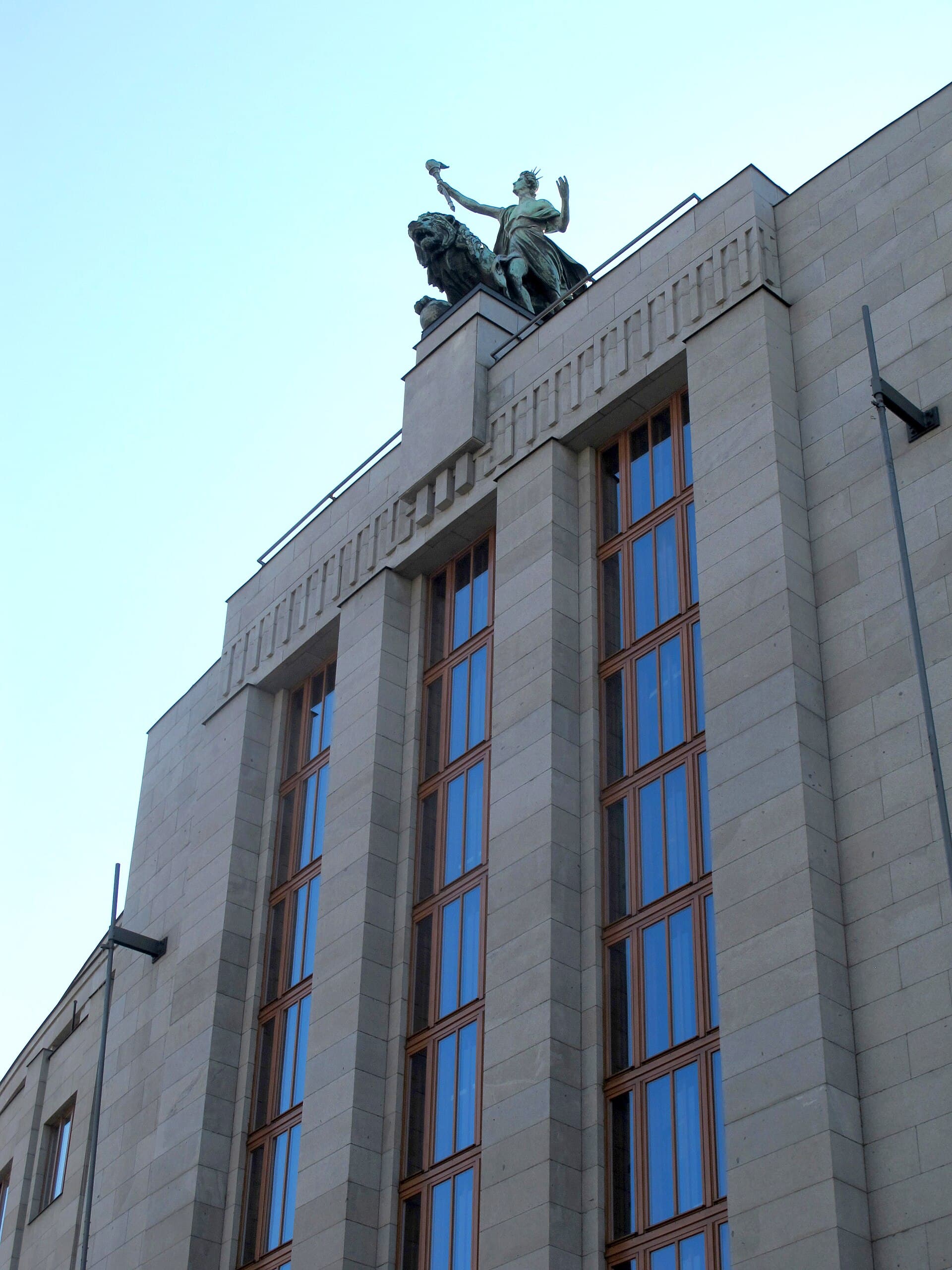
Tokenisation of real-world assets has moved past the proof-of-concept stage in several major markets, but the recent flurry of announcements says little about where Pakistan stands. The Czech National Bank said it completed small bond and repo tests on distributed-ledger technology in October and November, with settlement "almost instantaneous" but volumes only in the tens of thousands of koruna. In Europe, the European Central Bank said its Pontes link between market DLT platforms and the Eurosystem's TARGET Services settled the European Stability Mechanism's first digitally native benchmark bond of €1 billion on 2 November. In the United States, OKX and Intercontinental Exchange said their OKXICE joint venture will open a tokenised stock venue on 23 November, listing more than 70 assets under a temporary SEC exemption. Each is a different model, and none involves Pakistan.
The comparison that matters most for a Pakistani reader is who supplies the settlement asset. The Czech central bank's governor, Aleš Michl, said central bank money should anchor tokenised securities settlement, a preference that could limit the institutional payment balances available to stablecoin issuers. The ECB's Pontes does the same in euro: it settles tokenised transactions in central bank money. By contrast, the OKXICE venue pairs its tokens with payment stablecoins such as USDC and USDG. HSBC's Christie Chan, speaking at the World Digital Assets Forum in Seoul, argued that tokenised deposits, stablecoins and central bank digital money would serve different purposes rather than compete for one dominant role. The open question is which of these models a jurisdiction such as Pakistan would permit, and the material does not say.
The distribution problem is the next test, and it is the one most relevant to a market without a large tokenisation industry. Securitize's Gabriel Gareth Foo asked at the same forum: "Once we put these assets on the chain, what's the use case? What are we going to do with these assets?" HSBC's Orion platform has supported more than $8.3 billion in digital asset issuances, according to the bank, but Chan said investor reach and connections to existing market infrastructure matter as much as technology. Mirae Asset Securities' Lee Yong-jae said the firm needs to "connect our blockchain to global blockchain networks". For Pakistan, this suggests the binding constraint is not the ability to tokenise an asset but the plumbing - custody, settlement, distribution and cross-border connectivity - that makes a token useful to an investor.
Compliance is emerging as a parallel market. StarCompliance said it formed a strategic alliance with RWA.xyz to embed asset intelligence in its platform, flagging validated tokenised securities with a "Verified" label and mapping each token to its underlying asset and issuer. RWA.xyz's Dean Khan Dhillon said tokenised stocks had grown from $13 million to more than $3.5 billion in the last 2 years across 8,000 tokens. StarCompliance's Gary Mushrow said tokenised assets can exist as multiple tokens across different blockchains, making it difficult to distinguish legitimate securities from misleading or unverified tokens. The OKXICE launch illustrates the tension: 67 issuers, including Apple, Tesla and Meta, had sent written objections by 5 November, and the venue is not a registered exchange or broker-dealer and is not approved by the SEC. A Pakistani regulator contemplating tokenised assets would face the same identification problem, with fewer tools.
The policy conversation is moving through forums rather than through any single rulebook. Singapore FinTech Festival 2026, running from 18 to 20 November, will cover tokenisation and quantum technologies, and its invitation-only Insights2040 meetings will discuss challenges in scaling tokenised markets. The Monetary Authority of Singapore's Kenneth Gay said: "The decisions we make today about technology, regulation and financial infrastructure will shape how finance serves businesses and individuals for years to come." The ECB's Piero Cipollone said a swift conclusion of trilogue negotiations would give the legal certainty needed to complete preparations for the digital euro, with a pilot starting in the second half of 2027. These are the venues where the standards are being set; the material does not show Pakistan participating in any of them.
What is known is narrower than the headlines suggest. The Czech test was small, and the central bank has not identified the pilot's exact cash instrument; its payments-regulation director, Michal Vodrážka, said in a 5 November presentation that settlement in central bank money on DLT was not yet available, five days before the bond-test announcement, which did not specify whether the cash arrangement had changed. The OKXICE venue has not said how many of its more than 70 assets will trade on the first day, or how much liquidity the pools will have at the open. The ECB's digital euro pilot will use a beta version without legal tender status. None of this establishes that tokenised markets are mature; it establishes that they are being built.
For Pakistan, the material supports only limited conclusions. The direction of travel in the Czech Republic, the euro area, Singapore, Korea and the US is toward tokenised securities settled in regulated money, with compliance tooling and distribution as the bottlenecks. Whether Pakistan's regulators would allow tokenised securities, which settlement asset they would accept, and how they would treat stablecoins are questions the material does not answer. The comparison with the Czech and euro-area approach suggests that a central-bank-money anchor is one available model; the OKXICE approach suggests a private stablecoin model is another. The choice is a policy decision, not a technical one.
What to watch next: the OKXICE opening on 23 November and whether the 67 objecting issuers succeed in limiting it; the ECB's trilogue outcome and the digital euro pilot timetable; the Czech central bank's next step on whether central bank money on DLT becomes available for settlement; and whether any South Asian jurisdiction signals a position on tokenised assets at the Singapore FinTech Festival. For Pakistan, the most useful signal would be any statement from the State Bank or the finance ministry on tokenised assets or stablecoins; none appears in the material.