
Nikkei slides 3.6% as Democrat midterm win puts AI scrutiny on the ballot
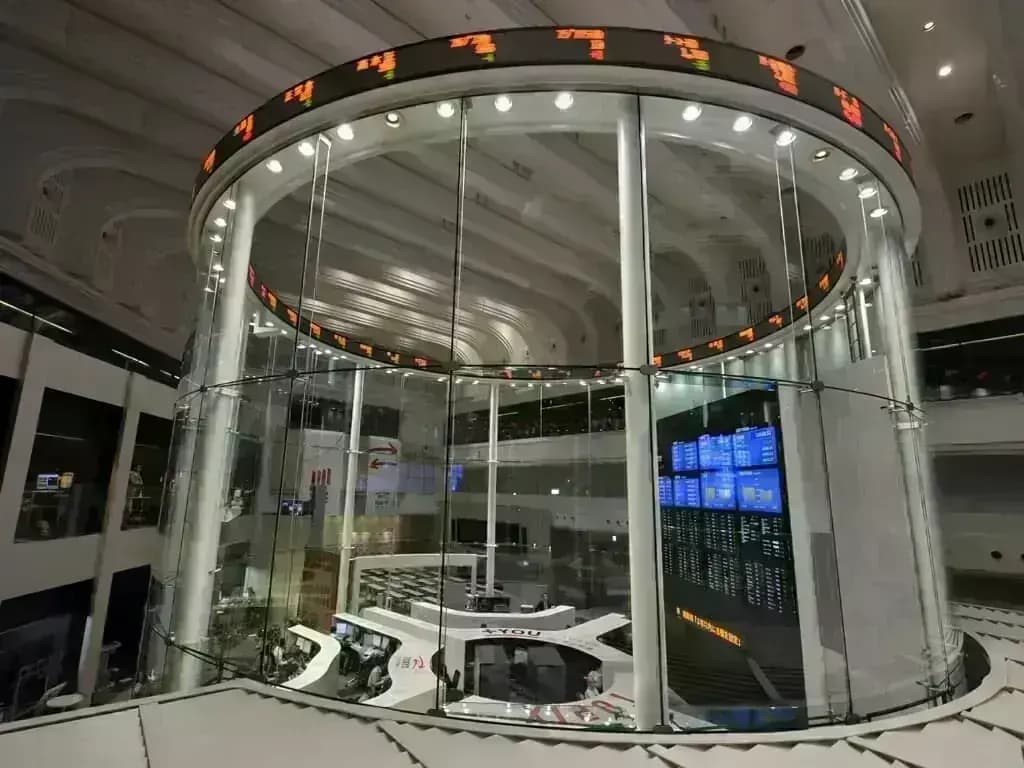
Japan's Nikkei 225 fell about 3.6 per cent to 60,835.36 on Wednesday, its lowest level since early May, as investors weighed what a Democratic sweep of both chambers of Congress means for the regulation of artificial intelligence and the data-centre buildout that has powered the technology trade.
SoftBank Group dropped around 8 per cent and memory-chip maker Kioxia Holdings fell more than 10 per cent, while Taiwan's Taiex declined about 2.3 per cent and Hong Kong's Hang Seng slipped 0.2 per cent. US futures had fallen more than 2 per cent before recovering to trade about 0.5 per cent lower, and FTSE 100 futures were down 0.4 per cent at around 06:39 GMT, with STOXX 600 and DAX futures each about 0.2 per cent weaker.
The reversal followed a stronger Tuesday on Wall Street, when the S&P 500 rose 0.36 per cent to 7,568.92 and the Nasdaq Composite added 0.83 per cent to 25,372.01, helped by Nvidia, Microsoft and Broadcom. The Dow Jones Industrial Average slipped 0.38 per cent to 51,786.72, while Apple fell about 1.9 per cent after warning that higher memory-chip costs could squeeze margins.
Investors are weighing the prospect of greater congressional scrutiny of technology and AI companies against the possibility that political gridlock limits major legislative change. Attention is concentrated on companies exposed to the AI infrastructure cycle, including electrical equipment, power systems and data-centre suppliers such as Siemens Energy and Schneider Electric, because closer oversight of US data-centre construction could slow investment growth and hit Asian suppliers. Safe-haven demand pushed the US 10-year Treasury yield down about six basis points to 4.906 per cent and the dollar index 0.37 per cent lower to 101.34, while the Bureau of Labor Statistics reported job openings little changed at 7.523 million in September.
What it means for Pakistan: For Pakistani investors and technology firms, the sell-off is a reminder of how directly AI sentiment in New York and Tokyo reaches local portfolios and outsourcing contracts. Any US slowdown in data-centre and AI infrastructure spending would feed through to Pakistani IT exporters and freelancers whose clients sit in that supply chain, while a stronger dollar or shifting Treasury yields affects the rupee and remittance flows. The Securities and Exchange Commission of Pakistan and the State Bank have no direct role in US midterm politics, but the episode underlines why Pakistani regulators are watching global rules on AI and digital assets as they draft their own.


