Pakistan's books are improving, but hunger now ranks it 106th of 122 countries
Pakistan's macroeconomic scorecard is improving. Its households are not. Petrol carries roughly Rs114 a litre in taxes and levies and high-speed diesel about Rs100, according to figures cited in the reporting, and those levies feed straight into the cost of food, farm produce, manufactured goods and public transport. The 2026 Global Hunger Index, meanwhile, places Pakistan in the "serious" category with a score of 25.5, ranking it 106th of 122 countries with sufficient data.
The index estimates that 16.1% of Pakistan's population is undernourished, that 33.6% of children under five are stunted and that 9.8% suffer from wasting. Set against the government's emphasis on rebuilding foreign exchange reserves and external stability, the numbers sharpen a question the stabilisation programme has yet to answer: what it has done for the household budget.
Islamabad remains inside the International Monetary Fund's Extended Fund Facility, with fiscal discipline, revenue mobilisation and energy-sector reform at the centre of the adjustment. In October, IMF staff and Pakistani authorities reached a staff-level agreement on the fourth review of the facility and the third review of the Resilience and Sustainability Facility, with further support subject to the Fund's Executive Board. Officials point to rising reserves and a steadier external account as proof the strategy is working.
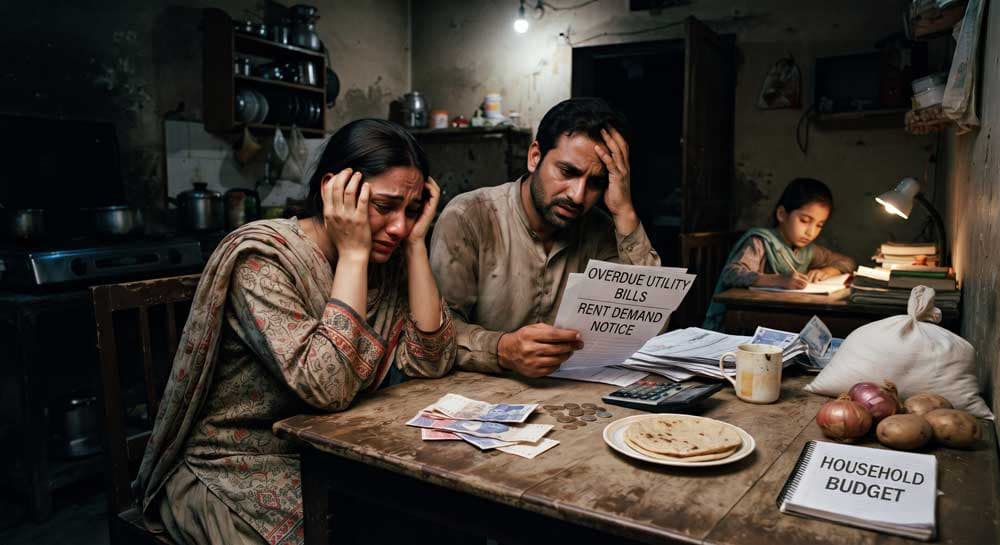
Inflation has eased from its peaks, but economists caution that slower price growth is not lower prices. For families that have absorbed years of increases in food, electricity, gas, transport, medicines and education, the cumulative loss of purchasing power persists. Salaried workers have been hit hardest because their incomes are documented and easily taxed while pay rises have lagged living costs; low-income households spend most of their earnings on food, rent, power and transport.
Economists quoted in the reporting argue for a rebalancing: widen the tax base into undertaxed large retail, property, wealth and parts of the informal economy rather than returning to petroleum consumers and salaried taxpayers, and strengthen targeted support through the Benazir Income Support Programme, nutrition schemes for mothers and children, and protection for low-consumption electricity users. The test for policymakers is whether Pakistan can hold its hard-won stability without letting the adjustment deepen poverty. For millions of households, the programme will be judged on whether their incomes cover food, transport, electricity, education and medicine, not on reserve figures.